Earth Science Reference

The Disastr Library

A simple guide to how each natural disaster forms. Read the quick explanation, scan the key steps, and watch a short educational video for each one.

How earthquakes work

Earthquakes

Earth's crust is broken into giant tectonic plates that slowly grind past each other. Friction locks them in place until the built-up strain suddenly releases, snapping the rock and sending out seismic waves that shake the ground.

  • Plates push against each other and get stuck
  • Elastic strain builds up like a bent ruler
  • The fault slips and releases energy as seismic waves
How volcanoes erupt

Volcanoes

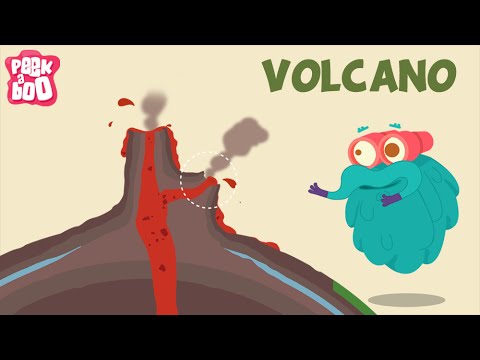
Deep underground, intense heat melts rock into magma. Being lighter than the solid rock around it, the magma rises and collects in a chamber. When the pressure of trapped gas grows too high, it bursts out as an eruption of lava, ash, and gas.

  • Heat melts rock into magma deep below ground
  • Buoyant magma rises and fills a chamber
  • Trapped gas pressure triggers the eruption
How wildfires start and spread

Wildfires

A wildfire needs three things — the "fire triangle": fuel (dry plants), oxygen, and heat (lightning, a spark, or hot weather). Once it ignites, wind and dry conditions push the flames from plant to plant, and the fire spreads.

  • Dry fuel + oxygen + heat start the fire
  • Wind carries embers ahead to start new flames
  • Dry weather and slopes speed the spread
How hurricanes form

Hurricanes & Storms

Over ocean water warmer than 26°C, warm moist air rises and condenses into clouds, releasing heat that powers a growing low-pressure system. Earth's rotation curves the inrushing winds into a giant spinning storm with a calm eye.

  • Warm ocean water evaporates and rises
  • Released heat lowers pressure and pulls in wind
  • The Coriolis effect sets the whole storm spinning
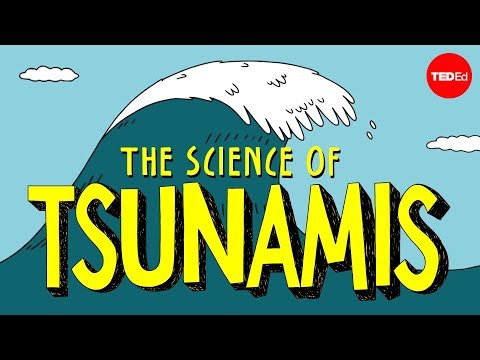
How tsunamis work

Tsunamis

When an undersea earthquake suddenly shifts the seafloor, it pushes the entire column of water above it. That energy spreads out as fast, low waves in deep water — then, near the shore, the waves slow and pile up into a towering wall of water.

  • An undersea quake jolts the seafloor upward
  • The whole water column is displaced as a wave
  • In shallow water the wave slows and grows tall
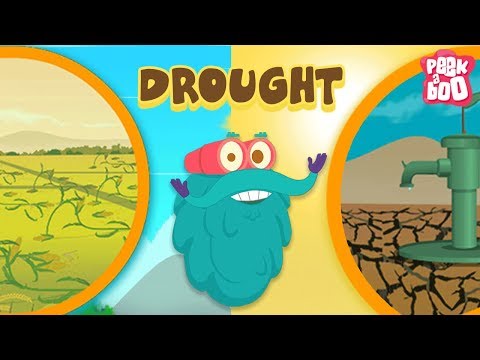
What causes droughts

Droughts

A drought is a long stretch with far less rain than normal. Shifting wind and pressure patterns can park dry air over a region for months. With little rain, soil dries out, rivers shrink, and water supplies run low.

  • Weather patterns block rain-bringing systems
  • Less rainfall dries out soil and rivers
  • Heat speeds evaporation, deepening the shortage